
Direct Answer
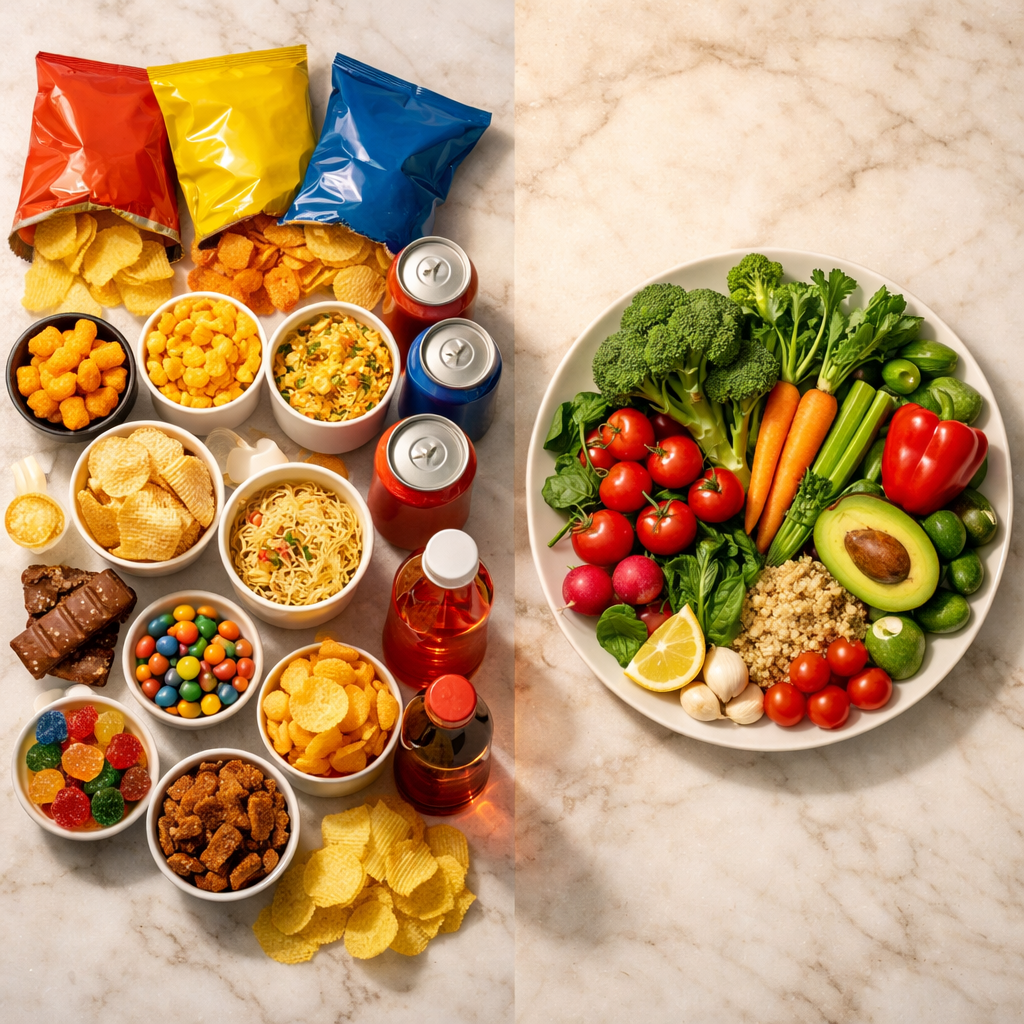
Ultra-processed foods (UPFs) are industrially manufactured products made predominantly from substances extracted or derived from whole foods – such as refined starches, hydrogenated fats, and added sugars – combined with cosmetic additives like artificial colours, flavours, emulsifiers, and preservatives [1]. These are not foods you could make in a home kitchen. Common examples include packaged snacks, fizzy drinks, sugary breakfast cereals, instant noodles, reconstituted meat products, and flavoured yoghurts with long ingredient lists [2]. Understanding what are ultra-processed foods has become one of the most urgent questions in modern nutrition science, as accumulating evidence links high UPF consumption to serious and wide-ranging health consequences.
(Android version coming soon)
Key Takeaways
- Ultra-processed foods are defined using the NOVA classification system, which groups foods by the extent and purpose of processing – not just nutrient content [1].
- An umbrella review of nearly 10 million participants found direct associations between UPF exposure and 32 out of 45 adverse health outcomes studied [3].
- Not all ultra-processed foods carry equal risk – specific subcategories like processed meats and sugary drinks show the strongest links to early death [4].
- Gut health is increasingly implicated, with food additives in UPFs disrupting the microbiome and intestinal barrier in preclinical and emerging human studies [5].
- Policy experts argue that regulatory action, research investment, and food environment reform are essential to address the UPF health crisis [6].

Main Analysis
Want to check if your products contain hidden allergens or risky ingredients? Scan them instantly with the free MyGredient app.
Try MyGredient Free(Android coming soon)
What Makes a Food “Ultra-Processed”?
The NOVA classification system, developed by researchers at the University of São Paulo, divides foods into four groups based on the degree and purpose of processing. Group 4 – ultra-processed foods – is defined not simply by having many ingredients, but by the nature of those ingredients and the industrial techniques applied [7]. These products typically contain substances not found in a home kitchen: hydrolysed proteins, maltodextrin, interesterified fats, high-fructose corn syrup, carrageenan, and a variety of synthetic additives designed to enhance palatability, extend shelf life, and improve visual appeal [1].
The British Nutrition Foundation notes that while the NOVA system is widely used in research, it was not originally designed as a dietary guidance tool, and its application requires careful interpretation [8]. That said, the sheer volume and consistency of research findings linking NOVA Group 4 foods to poor health outcomes has made it an indispensable framework for public health discussions. Products like dehydrated vegetable soups, ready meals, packaged baked goods, and reconstituted fish products all fall into this category – often containing high levels of added sugar, saturated fat, and salt alongside their additive load [2].
The Scale of the Health Evidence
In 2024, a landmark umbrella review published in the BMJ synthesised 45 unique pooled analyses covering nearly 9.9 million participants [3]. The results were striking: greater exposure to ultra-processed foods was directly associated with 32 (71%) of the health outcomes examined. These included all-cause mortality, cardiovascular disease mortality, type 2 diabetes, obesity, depression, and several cancers. The authors noted that the adverse outcomes may not be fully explained by nutrient composition or energy density alone – the physical and chemical properties introduced by industrial processing methods also appear to play a role [1].
A separate Harvard T.H. Chan School of Public Health analysis examined data from over 114,000 American adults and found that the relationship between UPFs and early death is not uniform across all subcategories [4]. Processed meats, sugar-sweetened beverages, and certain dairy-based desserts were most strongly associated with increased mortality risk. Interestingly, some ultra-processed categories – like wholegrain breakfast cereals and certain packaged bread products – showed weaker or no significant associations, underscoring the complexity of blanket UPF categorisation [4].
Cardiovascular Disease: A Mounting Concern
Cardiovascular disease remains one of the most researched consequences of high UPF consumption. Systematic reviews examining the methodology behind UPF intake assessment suggest that even when accounting for energy intake and nutrient quality, UPFs independently increase cardiovascular risk [3]. This finding is particularly important because it suggests that something beyond simple nutrient profiling – potentially the additive load, food matrix disruption, or ultra-palatability driving overconsumption – is contributing to heart disease risk.
Want a smarter way to scan food and cosmetic ingredients that’s personalized to your needs? download MyGredient app and scan products in seconds.
Emulsifiers and artificial sweeteners, for example, have been investigated for their potential to alter lipid metabolism and promote low-grade systemic inflammation. While much of this mechanistic evidence remains preclinical, the epidemiological signal in large human cohorts is consistent and strong enough to warrant serious attention from clinicians and policymakers alike [3].
Gut Health and the Microbiome
One of the most active areas of UPF research concerns gut health. A 2024 review published in PubMed examined the effects of UPFs and their constituent food additives on the gastrointestinal system [5]. Evidence from in vitro and animal studies suggests that common additives – including certain emulsifiers, artificial sweeteners, and thickeners – can disrupt the gut microbiome composition, compromise intestinal barrier integrity, and promote pro-inflammatory states. Fewer rigorous human intervention trials exist, but the mechanistic plausibility is compelling, and the field is advancing rapidly [5].
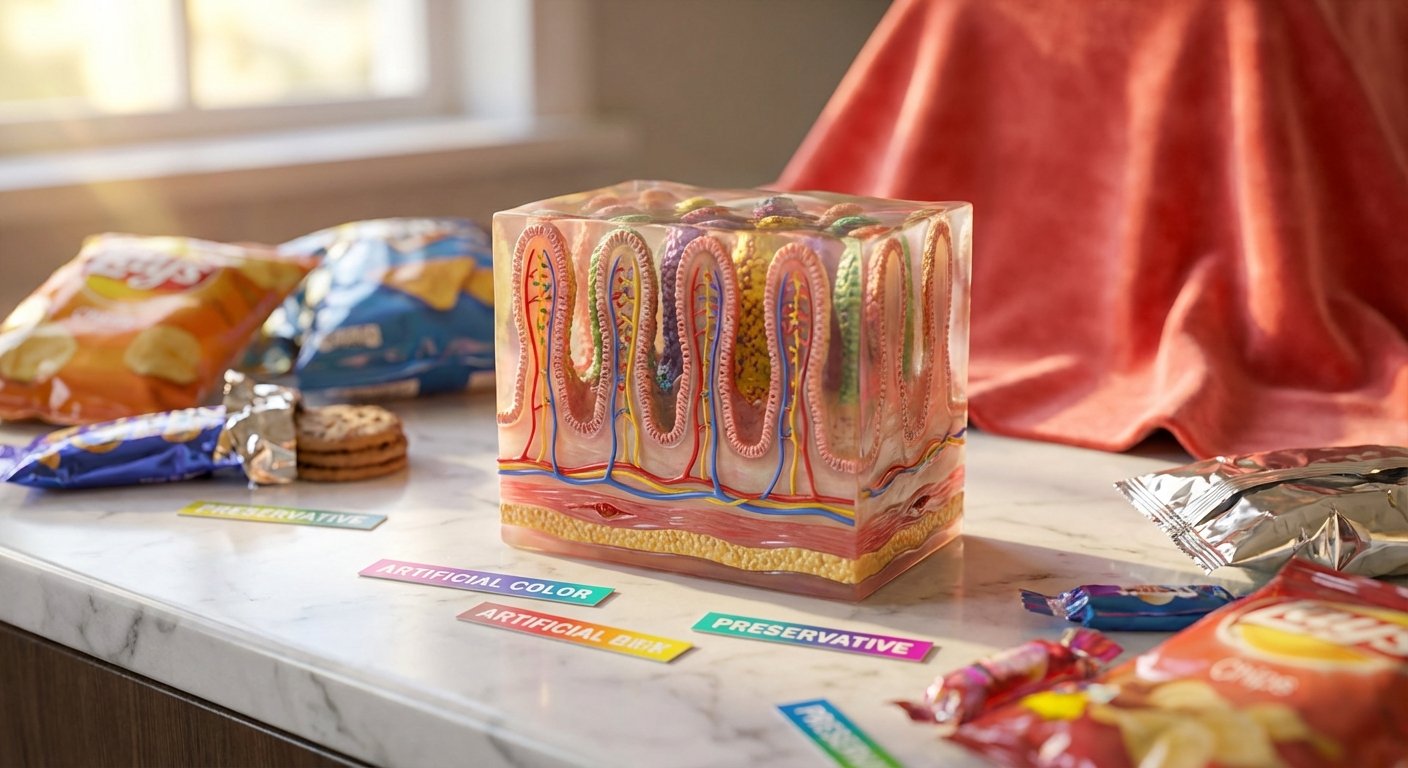
A disrupted microbiome has downstream implications for immunity, mental health, metabolic regulation, and even cardiovascular function – creating a web of interconnected risks that makes UPF consumption particularly concerning from a systems-medicine perspective.
Mental Health: An Emerging Connection
Beyond physical health, the 2024 BMJ umbrella review identified associations between UPF consumption and depression, anxiety, and adverse sleep outcomes [3]. While establishing causality in observational nutrition research is methodologically challenging, the consistency of findings across diverse populations and study designs lends credibility to the hypothesis that diet quality – including UPF intake – materially influences mental wellbeing. Potential mechanisms include gut-brain axis disruption, nutritional displacement of key micronutrients involved in neurotransmitter synthesis, and the effects of specific additives on neurological function.
Policy Responses and What Needs to Change
Given the scale of potential harm, nutrition policy experts at Harvard have outlined five actionable policy responses to the UPF crisis [6]. These include: investing in dedicated nutrition research infrastructure; reforming food labelling to clearly distinguish ultra-processed products; using fiscal tools such as taxes on high-UPF categories; restricting UPF marketing to children; and overhauling institutional food environments – including schools, hospitals, and care homes – to reduce UPF availability [6].
A 2025 paper in The Lancet reinforced the urgency of this agenda, describing UPFs as “commercial formulations made from cheap ingredients… combined with additives” that have fundamentally reshaped global food systems to the detriment of public health [7]. The authors argue that existing regulatory frameworks focused on individual nutrients are insufficient to address products whose harms may emerge from the combination of processing techniques, additive interactions, and dietary displacement of whole foods.
Practical Identification: What to Look For
For consumers, identifying ultra-processed foods requires looking beyond front-of-pack claims. A useful heuristic is to scan the ingredient list: if it contains substances you would not find in a home kitchen – such as xanthan gum, acesulfame potassium, polysorbate 80, or modified starch – the product is likely ultra-processed [2]. Long ingredient lists with multiple additive categories (flavour enhancers, emulsifiers, stabilisers, colourants) are another reliable indicator. Critically, marketing terms like “natural,” “wholesome,” or “no artificial colours” do not preclude a product from being ultra-processed by NOVA criteria [8]. That same habit of reading past the headline claim can also help people spot hidden food allergy triggers that are easy to miss.
Ingredient scrutiny can also be useful beyond food aisles, especially when common personal-care ingredients cause confusion without strong evidence of harm. A good example is the recurring debate over whether mineral oil in skincare is actually safe.
If you want a quicker, more personalized way to check food and cosmetic ingredients while you shop, download MyGredient app for a fast ingredient scan.
FAQ
Are all processed foods ultra-processed?
No. The NOVA classification distinguishes between minimally processed foods (like frozen vegetables or plain yoghurt), processed culinary ingredients (like olive oil or flour), processed foods (like canned fish or cheese), and ultra-processed foods [7]. Many processed foods are nutritious and minimally altered. The defining feature of UPFs is the presence of industrial additives and techniques not used in home cooking, rather than processing per se.
Can ultra-processed foods ever be healthy?
The evidence suggests that the risk is not uniform across all UPF subcategories. Some products classified as UPFs – such as certain fortified wholegrain cereals or plant-based milks – showed weaker associations with adverse outcomes in the Harvard cohort study [4]. However, the overall pattern strongly favours minimising UPF intake, and no ultra-processed food is inherently necessary for a healthy diet when whole-food alternatives are available.
How much of the average diet consists of ultra-processed foods?
In high-income countries, UPFs often account for 50 – 60% of total caloric intake. In the United States, studies have estimated that UPFs contribute approximately 57% of daily energy intake among adults [3]. The United Kingdom shows similarly high figures, with particular concern around children’s diets where UPF consumption is even more pronounced [8].
Do food additives in UPFs directly cause harm?
Current evidence from preclinical studies suggests that several common additives – including certain emulsifiers and artificial sweeteners – can disrupt the gut microbiome and promote inflammation [5]. However, most human evidence is still observational. Regulatory bodies like the European Food Safety Authority evaluate individual additives for safety at specified doses, but the cumulative and interactive effects of multiple additives consumed together in real-world diets remain less well understood [5].
For a simple way to check food and cosmetic ingredients before you buy, download MyGredient app and scan in real time.
What is the single most important step to reduce UPF consumption?
Nutrition researchers consistently recommend building meals around minimally processed whole foods – vegetables, legumes, whole grains, fish, eggs, and plain dairy – as the most effective strategy [6]. Cooking from scratch more frequently, even partially, substantially reduces additive exposure. Reading ingredient lists rather than relying on front-of-pack health claims is also strongly advised, as marketing language can be misleading [8].
(Android version coming soon)
References
- Ultra-processed food exposure and adverse health outcomes – BMJ 2024
- New evidence links ultra-processed foods with a range of health risks – BMJ Newsroom
- Ultra-processed food exposure and adverse health outcomes – PubMed 2024
- Ultra-processed foods – some more than others – linked to early death – Harvard T.H. Chan School of Public Health
- Ultra-processed foods and food additives in gut health and disease – PubMed 2024
- Ultra-processed foods: Five policy ideas that could protect health – Harvard T.H. Chan School of Public Health
- Ultra-processed foods and human health: the main thesis and the evidence – Lancet 2025 [Abstract only – full text behind paywall]
- The concept of ultra-processed foods (UPF) – British Nutrition Foundation Position Statement, updated May 2024
Written by the MyGredient Research Team
Our team researches ingredient safety, food labelling regulations, and skincare science to help consumers make informed choices. Every article is fact-checked against peer-reviewed sources and regulatory guidance.
🔬 Evidence-Based | 📚 Peer-Reviewed Sources | 📅 Updated March 2026
Medical Disclaimer: This content is for informational purposes only and does not constitute medical advice. Consult a qualified healthcare professional for personalised guidance. If you experience adverse reactions to any product, seek medical attention.

Pingback: Are These 7 Foods Secretly Triggering Your Food Allergies