
Direct Answer
Veganism extends far beyond avoiding obvious animal products like meat and dairy. A thorough sneaky non vegan ingredients list reveals that dozens of common pantry staples contain hidden animal-derived components – from refined white sugar processed through bone char to “natural flavors” that may derive from animal sources. Navigating food labels with confidence requires knowing exactly which additives, processing agents, and seemingly innocuous ingredients are actually animal-derived. This guide identifies ten of the most commonly overlooked culprits hiding in everyday foods.
(Android version coming soon)
Key Takeaways
- Gelatin is found in far more products than most people expect, including marshmallows, gummy vitamins, and certain yogurts.
- Casein and whey – milk-derived proteins – frequently appear in non-dairy creamers and protein powders.
- Bone char is used to whiten refined cane sugar, making many baking staples non-vegan.
- Isinglass, derived from fish bladders, is a common fining agent in beer and wine.
- Several additives such as carmine (E120), L-cysteine, and shellac have direct animal origins that labels rarely make obvious.

- Transitioning to a fully plant-based diet carries nutritional risks, particularly for vitamin B12, which is found exclusively in animal-derived foods [2].
- Reading ingredient lists carefully – and understanding E-numbers – is the single most effective way to avoid these hidden ingredients [3].
Main Analysis
Want to check if your products contain hidden allergens or risky ingredients? Scan them instantly with the free MyGredient app.
Try MyGredient Free(Android coming soon)
1. Gelatin
Gelatin is derived from boiled animal bones, skin, and connective tissue – primarily from pigs and cattle. Despite being unmistakably animal-based, it appears in a surprising range of pantry and refrigerator items: marshmallows, jelly desserts, cream cheese, low-fat yogurts, frosted cereals, and even some vitamin capsules. It is also the gelling agent in many packaged fruit snacks marketed to children. Always check for “gelatin” on labels, and seek out products that specify agar-agar or pectin as alternatives.
2. Refined White Sugar (Processed with Bone Char)
Refined cane sugar is often processed using bone char – a filter made from charred cattle bones – to achieve its bright white appearance. While the bone char itself does not end up in the final product, the process uses an animal byproduct, which many vegans consider disqualifying. Beet sugar is never processed this way, and certified organic cane sugar typically avoids bone char filtering. Look for products that explicitly state “vegan sugar” or are sweetened with beet sugar or coconut sugar.
3. Casein and Whey
These two proteins are derived from cow’s milk and are found extensively in processed foods, often under the guise of seeming neutral descriptors. Whey appears in bread, crackers, protein bars, instant soups, and even some crisps. Casein is particularly prevalent in non-dairy creamers – a category where consumers frequently assume animal products are absent. Research into plant-based dietary patterns highlights that accidental dairy consumption via additives is a common pitfall for new vegans [4]. Both are listed on ingredient panels, so careful label reading is essential.
Want a quicker way to check ingredient lists while you shop? Download the MyGredient app and scan products in seconds.
4. Carmine (E120)
Carmine, also labeled cochineal extract, natural red 4, or E120, is a red dye extracted from crushed cochineal insects. It is widely used to give red, pink, or purple hues to food products including fruit juices, yogurts, candies, jams, and certain alcoholic drinks. The U.S. Food and Drug Administration requires carmine to be listed by name on food labels [5], but many consumers do not recognise it as insect-derived. The term “natural color” can sometimes mask its presence in products sold outside the U.S., making international shopping particularly challenging.
5. Isinglass
Isinglass is a fining agent derived from the dried swim bladders of fish, particularly sturgeon. It is used in the production of beer, cider, and wine to remove cloudiness by binding with yeast particles, which then settle out of the liquid. Since it is a processing aid rather than an ingredient, isinglass rarely appears on labels. Vegan consumers should use resources like Barnivore or look for products certified vegan, particularly when purchasing beverages. Many craft breweries now use bentonite clay or Irish moss as animal-free alternatives.

6. L-Cysteine (E920)
L-cysteine is an amino acid frequently used in commercial bread-making and pastry production to condition dough and extend shelf life. It is most commonly derived from poultry feathers or human hair, though a fermentation-derived vegan version does exist and is increasingly available. The animal-derived form is still prevalent in mass-produced baked goods, crackers, and pizza bases. Since it is classified as a processing aid, it may not always appear on ingredient lists, making it one of the harder non-vegan additives to track.
7. Shellac (E904)
Shellac is a resinous secretion produced by the lac insect, native to Southeast Asia. In the food industry, it is used as a glazing agent on confectionery, some fresh fruits (particularly apples and citrus), and certain supplement tablets to give them a glossy, preserved appearance [5]. It appears under the additive code E904 or listed simply as “confectioner’s glaze.” Shiny-coated candies, jelly beans, and chocolate-covered nuts frequently contain shellac, making it one of the most easily overlooked insect-derived ingredients.
8. Lanolin (in Vitamin D3 Supplements)
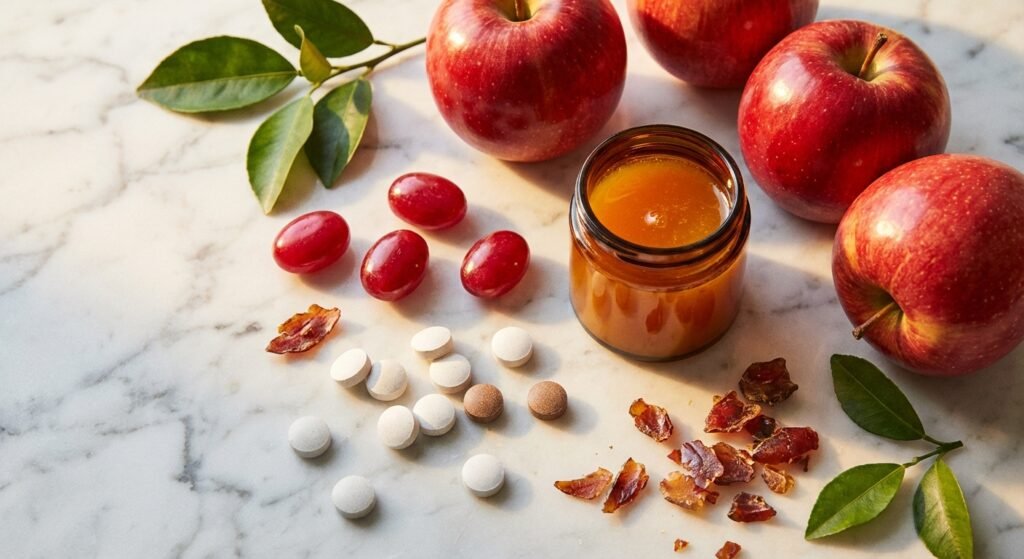
Most vitamin D3 supplements are derived from lanolin – a waxy substance secreted by the skin glands of sheep and extracted from their wool. This is especially relevant for vegans because vitamin D deficiency is a documented concern in plant-based diets [7]. Vegan D3 sourced from lichen is now commercially available and provides an equivalent alternative. When purchasing fortified foods – including some plant milks and cereals – it is worth checking whether the vitamin D listed is D2 (typically vegan) or D3 (often lanolin-derived).
If you compare supplements and fortified foods often, Download the MyGredient app for a faster ingredient check.
9. Omega-3 Fatty Acids from Fish Oil
Omega-3 enriched products – from fortified eggs and milk to certain breads, spreads, and orange juices – typically derive their DHA and EPA content from fish oil. While plant-based omega-3 from flaxseed (ALA) exists in some products, the more bioavailable long-chain forms are predominantly marine-sourced. Labels should specify the source; phrases like “contains omega-3” without clarification often indicate fish-derived oil. Algae-based DHA and EPA are legitimate vegan alternatives now available in supplement and food-grade forms as plant-based innovation expands [8].
10. Natural Flavors
The FDA defines “natural flavors” broadly to include substances derived from “animal or vegetable matter” [5]. This umbrella term can legally conceal beef extract, chicken fat, or dairy derivatives within a food product’s flavoring blend. Natural flavors appear in a vast range of packaged goods – from canned soups and sauces to chips and flavored beverages. Contacting manufacturers directly or choosing products certified by established vegan certification bodies remains the most reliable method for verification, as ingredient labels alone are insufficient.
Why This Matters for Nutrition
Avoiding these hidden ingredients is central to maintaining a consistent vegan diet, but awareness must be paired with nutritional vigilance. Modeled vegetarian and pescatarian food patterns suggest that well-planned animal-free eating can meet many nutrient targets, but it still requires attention to specific nutrients [1]. A comprehensive umbrella review of meta-analyses found that vegan diets are associated with lower cardiovascular risk markers but also with significantly elevated fracture risk [7], partly due to lower calcium and vitamin D intake. Unfortified plant foods do not reliably provide vitamin B12, so many vegans rely on fortified foods or supplements [2]. Commercial plant-based meat alternatives can help bridge convenience gaps, but their ingredient profiles and nutritional trade-offs still need careful review [6]. Plant-forward eating patterns are also often discussed in the context of anti-inflammatory diets built around less processed staples [10].
FAQ
Is all wine non-vegan?
Not all wine is non-vegan, but many conventional wines are processed using animal-derived fining agents such as isinglass, egg whites (albumin), or milk proteins (casein). A growing number of wineries now use vegan-friendly alternatives like bentonite or pea protein. Always check the bottle for vegan certification or consult an online database dedicated to vegan wine and beer listings.
Can white sugar really be non-vegan?
Yes. Refined cane sugar is frequently filtered through bone char – charred cattle bones – during the whitening and purification process. While no bone particles remain in the final product, the use of this animal byproduct is considered non-vegan by many strict adherents. Opting for certified organic cane sugar, beet sugar, or coconut sugar is a reliable way to avoid this issue.
Are vitamin supplements safe for vegans?
Many supplements contain hidden animal derivatives – gelatin capsules, lanolin-based vitamin D3, fish oil omega-3s, and even shellac coatings on tablets. Vegans should specifically seek out supplements labeled vegan-certified or that use HPMC (hydroxypropyl methylcellulose) capsules instead of gelatin. Fortified foods and supplements are especially important sources of vitamin B12 for vegan diets [2].
What does “natural flavors” actually mean on a label?
The FDA permits the term “natural flavors” to describe a broad category of flavor compounds derived from either plant or animal matter, including animal tissues, secretions, and byproducts [5]. This means a product carrying “natural flavors” may contain hidden meat, dairy, or other animal-derived flavor components. Contacting the manufacturer directly or choosing certified vegan products is the most reliable way to verify what a natural flavor actually contains.
How can someone new to veganism efficiently check for these ingredients?
New vegans benefit from using established vegan certification symbols (such as the Vegan Society trademark) as a first filter, since certified products have been verified to exclude all animal derivatives at every stage of production. Beyond certification, learning the key E-numbers associated with animal origins – E120 (carmine), E441 (gelatin), E904 (shellac), E920 (L-cysteine) – allows faster label scanning. Digital tools and AI-assisted ingredient screening are also increasingly useful for real-time shopping decisions [9].
For a simple way to check ingredient lists before you buy, Download the MyGredient app and scan in real time.
(Android version coming soon)
References
- Modeling lacto-vegetarian, pescatarian, and "pescavegan" USDA food patterns – PubMed
- Vitamin B12 deficiency can be sneaky and harmful – Harvard Health
- The best ways to identify processed foods – Harvard Health
- Dietary intake, nutritional status, and health outcomes among vegan populations – Nature
- Overview of Food Ingredients, Additives and Colors – FDA
- The rise of plant-based meat alternatives: Challenges and considerations – ScienceDirect
- Evidence of a vegan diet for health benefits and risks – PubMed
- Feeding climate and biodiversity goals with novel plant-based meat alternatives – Nature
- Next-generation nutrition: Innovative and AI-tailored concentrated ingredients – ScienceDirect
- Foods that fight inflammation – Harvard Health
Written by the MyGredient Research Team
Our team researches ingredient safety, food labelling regulations, and skincare science to help consumers make informed choices. Every article is fact-checked against peer-reviewed sources and regulatory guidance.
🔬 Evidence-Based | 📚 Peer-Reviewed Sources | 📅 Updated March 2026
Medical Disclaimer: This content is for informational purposes only and does not constitute medical advice. Consult a qualified healthcare professional for personalised guidance. If you experience adverse reactions to any product, seek medical attention.