Direct Answer
Yes, hidden gluten in skincare can matter for people with celiac disease, especially with lip products, hand creams, or anything that can transfer to the mouth. Skin contact alone does not usually cause the intestinal damage seen in celiac disease, but gluten-derived ingredients such as hydrolyzed wheat protein can still be a concern for dermatitis herpetiformis, wheat allergy, or accidental ingestion risk. The safest approach is to check INCI names carefully, avoid wheat-, barley-, rye-, and oat-derived proteins when the source is unclear, and use a faster ingredient-checking workflow when you shop. You can install MyGredient to scan products quickly or see pricing if you want ongoing ingredient checks.
(Android version coming soon)
Key Takeaways
- Individuals with celiac disease, non-celiac gluten sensitivity, or wheat allergies must be vigilant about potential hidden gluten in skincare and personal care products.
- Common gluten-containing ingredients in cosmetics often include wheat germ oil, hydrolyzed wheat protein, triticum vulgare, hordeum vulgare (barley), avena sativa (oat), and secale cereale (rye) [3].
- Regulatory frameworks for gluten labeling in cosmetics are less stringent than those for food, placing the onus on consumers to research and verify product ingredients [4].
- Direct skin contact with gluten in skincare products can trigger dermatological reactions such as irritation, rashes, or contact dermatitis, particularly in individuals with pre-existing skin conditions or heightened sensitivities [5].
- While systemic reactions from skin absorption of gluten are highly unlikely for celiac disease, accidental ingestion (e.g., from lip products or toothpaste) poses a genuine risk of triggering gastrointestinal symptoms [6].
- Opting for products explicitly labeled “gluten-free” and seeking third-party certifications can significantly reduce the risk of exposure to hidden gluten in personal care items.
Can Gluten In Skincare Harm People With Celiac Disease?
For most people with celiac disease, the biggest concern is not skin contact alone but the chance that gluten-containing skincare could be transferred to the mouth and swallowed in small amounts. That is why lip balm, lipstick, hand cream, and products used around the mouth deserve more scrutiny than a rinse-off body wash used on intact skin. Current expert guidance generally treats ingestion as the main trigger for the intestinal autoimmune response seen in celiac disease, while topical exposure is more often discussed in relation to wheat allergy, dermatitis herpetiformis, or irritated skin barriers [1][3].
That said, the practical risk still matters in real life. If you apply a product several times a day, touch your lips often, or use creams before eating, the line between “topical” and “accidental ingestion” becomes less clean. For celiacs who want to reduce avoidable exposure, a cautious ingredient-checking routine is usually the most realistic approach.
Which Skincare Ingredients May Contain Gluten?
Gluten is not usually listed as “gluten” on skincare packaging. Instead, it appears through grain-derived ingredients, proteins, or extracts. The names below are worth checking carefully, especially when the source is not clearly stated or the product is used near the mouth.
- Hydrolyzed Wheat Protein or Triticum Vulgare derivatives
- Hordeum Vulgare extract, which points to barley
- Secale Cereale, which refers to rye
- Avena Sativa, which refers to oats and may require extra caution if sourcing or cross-contact is unclear
- Grain proteins, peptides, ferments, or extracts where the original cereal source is not obvious at a glance
Ingredient names can be technical and easy to miss, which is why many shoppers do better with a repeatable check rather than relying on memory alone.
Which Products Carry The Highest Practical Risk?
Lip Products
Lip balm, lipstick, lip gloss, and lip masks are the highest-priority products to check because they are used directly on the mouth and are easy to ingest in small repeated amounts.
Hand Creams
Hand creams matter because they transfer to food, cutlery, and the lips more often than people realize, especially when used throughout the day.
Face Creams And Makeup Near The Mouth
Products applied around the mouth, including concealer, moisturiser, and some sunscreens, deserve extra attention when they are likely to migrate or be touched repeatedly.
Hair Products
Hair masks, leave-ins, and styling products are lower priority for most celiacs, but they can still become relevant if they run onto the face, are touched frequently, or are used on children who put hands in their mouths.
What Is The Difference Between Celiac Disease, Wheat Allergy, And Skin Reactions?
Celiac disease is an autoimmune condition driven by gluten ingestion. Wheat allergy is an allergic response to wheat proteins and can involve skin, respiratory, or systemic symptoms. Contact dermatitis and other skin reactions are different again, because they relate to local irritation or hypersensitivity on the skin rather than the intestinal damage pattern seen in celiac disease [3][4].
This distinction matters because not every “gluten reaction” is the same. A product that is less likely to trigger celiac-related intestinal harm may still be a bad choice for someone with wheat allergy, dermatitis herpetiformis, or a history of reactive skin.
How To Check Skincare For Hidden Gluten Before You Buy
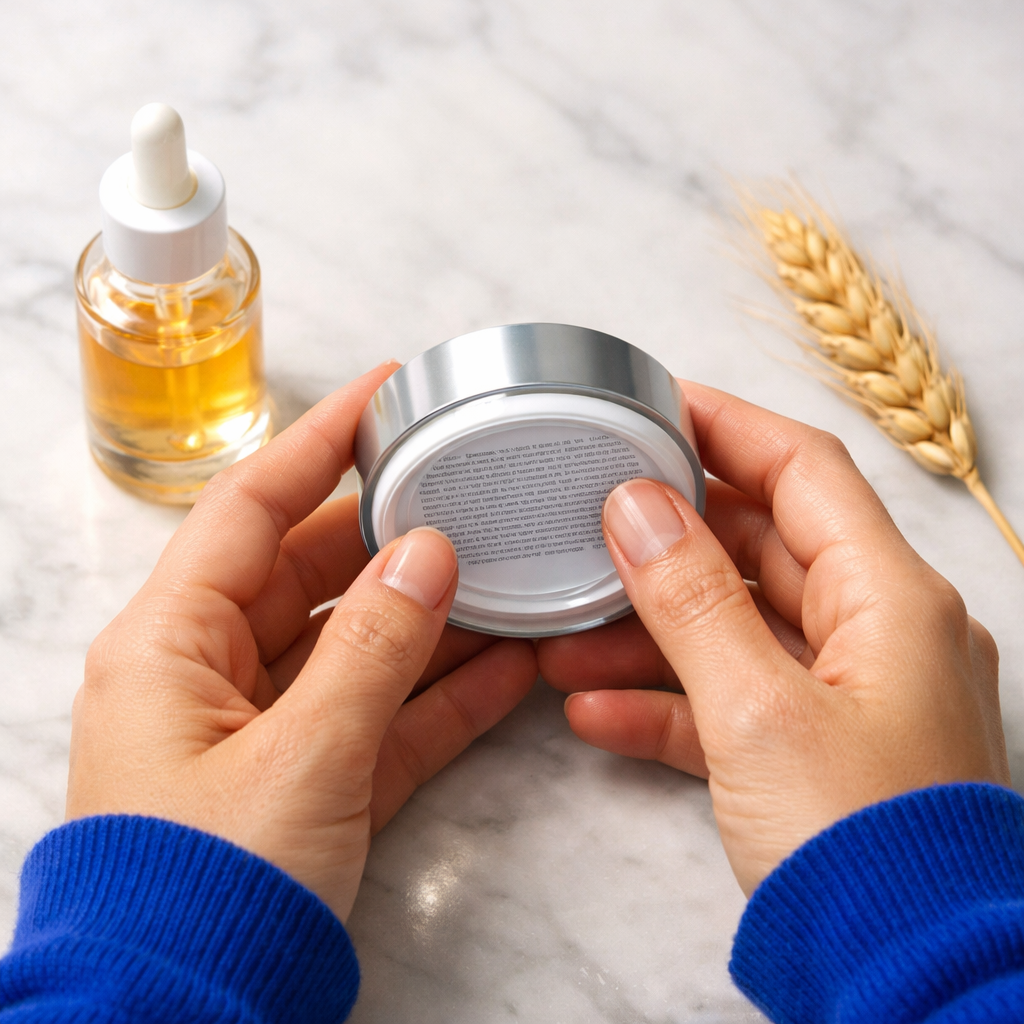
- Check the full INCI list, not just the front label.
- Prioritise lip products, hand creams, and products used around the mouth.
- Watch for wheat-, barley-, rye-, and oat-derived proteins or extracts.
- Do not assume “gentle” or “clean” means gluten-free.
- Use a faster ingredient-checking workflow when shopping so you can compare products consistently instead of guessing.
If you want a quicker way to review ingredient lists while you shop, you can install MyGredient, visit the main MyGredient hub, or see pricing before you build a more repeatable checking routine.
Want to check if your products contain hidden allergens or risky ingredients? Scan them instantly with the free MyGredient app.
Try MyGredient Free(Android coming soon)
Celiac disease is a severe autoimmune disorder characterized by an adverse reaction to gluten, a protein found in wheat, barley, and rye. Ingestion of gluten by a person with celiac disease leads to damage in the small intestine, impairing nutrient absorption and causing a range of symptoms [4]. While the central focus for celiac patients is dietary adherence, growing awareness highlights the potential for gluten exposure through non-food sources, including skincare and other personal care products. Although the human skin acts as a protective barrier, the concern primarily revolves around direct skin reactions and the risk of incidental ingestion [3].
Want a smarter way to scan food and cosmetic ingredients that’s personalized to your needs? download MyGredient app and scan products in seconds.
The skin’s ability to absorb proteins like gluten in quantities sufficient to trigger a systemic celiac response is generally considered low. Studies indicate that intact gluten proteins are too large to be effectively absorbed through healthy skin in amounts that would provoke an internal autoimmune reaction [3]. However, this does not negate the risk of dermatological reactions. For individuals with highly sensitive skin, eczema, or compromised skin barriers, topical application of gluten-containing products can lead to contact dermatitis, itching, redness, or rashes [7]. This is distinct from the internal damage of celiac disease but can still be a significant quality of life issue for affected individuals.
A crucial aspect of concern is accidental ingestion. Products applied to the lips, around the mouth, or hands are particularly problematic. Lip balms, lipsticks, toothpastes, mouthwashes, and even hand creams can easily be transferred to the mouth and ingested, albeit in small amounts. For someone with celiac disease, even trace amounts of ingested gluten can be enough to trigger an immune response and intestinal damage [6]. The previously mentioned case of a child with persistent celiac symptoms linked to a gluten-containing dental product vividly illustrates this risk [1]. This reinforces the necessity for caution with any personal care product that may come into contact with mucous membranes or be accidentally swallowed.
Skincare products frequently utilize gluten or its derivatives for various functional benefits. Wheat germ oil, for instance, is valued for its moisturizing and antioxidant properties. Hydrolyzed wheat protein is a common ingredient that acts as a film-former, conditioning agent, or humectant, improving skin and hair texture [8]. Other problematic ingredients can include Triticum Vulgare (wheat), Hordeum Vulgare (barley), Avena Sativa (oat, though controversial for celiacs, cross-contamination is a risk), and Secale Cereale (rye). These are often listed under their scientific names, making identification challenging for the average consumer [3]. The lack of standardized, mandatory labeling for gluten in cosmetics further complicates the situation, leaving consumers to navigate complex ingredient lists without clear guidance [2]. Unlike food products where agencies like the FDA in the United States have established definitions for “gluten-free” labeling, the cosmetic industry often lacks such stringent requirements [2]. This regulatory gap means that manufacturers are not legally obligated to test for or disclose gluten content, making self-advocacy and diligent research paramount for consumers.
If you want a quicker, more personalized way to check food and cosmetic ingredients while you shop, download MyGredient app for a fast ingredient scan.
For individuals with non-celiac gluten sensitivity (NCGS) or wheat allergies, the concerns broaden. While NCGS does not involve the autoimmune intestinal damage seen in celiac disease, it can manifest with gastrointestinal and extra-intestinal symptoms, some of which might be triggered by skin exposure or accidental ingestion, though research on this specific pathway is less robust [3]. Wheat allergies, on the other hand, are IgE-mediated immune responses that can cause hives, swelling, or even anaphylaxis upon contact or ingestion of wheat proteins, including those found in skincare [9]. Therefore, gluten-free skincare becomes a necessary precaution for a wider spectrum of individuals beyond those with diagnosed celiac disease.
The increasing demand for allergen-friendly products has led many beauty companies to offer explicitly “gluten-free” options. These products undergo careful formulation and sometimes third-party certification to ensure they meet stringent gluten-free standards [2]. Consumers should actively seek out such labels and, if doubt persists, contact manufacturers directly for clarification on their ingredient sourcing and production processes. Reading labels carefully, understanding common alternative names for gluten ingredients, and researching manufacturers’ claims are indispensable strategies [2]. While complete absorption of gluten through the skin to cause systemic celiac disease is highly improbable with healthy skin, the combined risks of contact reactions, compromised skin barriers, and incidental ingestion make gluten-free personal care a prudent choice for those managing gluten-related disorders [3, 10]. The peace of mind afforded by knowing products are free from potential triggers contributes significantly to overall well-being for this sensitive population.
FAQ
- Can gluten in skincare cause celiac disease symptoms?
While gluten in skincare products is highly unlikely to cause the gastrointestinal symptoms associated with ingested gluten through skin absorption alone, individuals with celiac disease might experience skin irritations like contact dermatitis. The primary risk of systemic symptoms arises from accidental ingestion of gluten-containing skincare, especially products applied to the lips or around the mouth [6]. - What common skincare ingredients contain gluten?
Common gluten-containing ingredients in skincare products include hydrolyzed wheat protein, Triticum Vulgare (wheat), Hordeum Vulgare (barley), Secale Cereale (rye), and sometimes Avena Sativa (oat, due to cross-contamination risk). These ingredients are often used for their beneficial textural properties, such as conditioning, binding, or emulsifying [3, 11]. - Are gluten-free skincare products effective?
Absolutely. Gluten-free skincare products can be just as effective as their gluten-containing counterparts. Many reputable brands have successfully formulated high-quality, effective skincare lines without the use of gluten-derived ingredients, ensuring they do not compromise on quality or performance. The effectiveness of a product primarily depends on its active ingredients and overall formulation, not the presence or absence of gluten [2]. - Is it necessary for everyone to use gluten-free skincare?
No, it is not necessary for everyone to use gluten-free skincare. This recommendation primarily applies to individuals diagnosed with celiac disease, non-celiac gluten sensitivity, or wheat allergies, as they are at risk of adverse reactions. For the general population without such sensitivities, using gluten-containing skincare products poses no known health risk [9]. - How can I ensure my skincare product is gluten-free?
To ensure your skincare product is gluten-free, always look for explicit “gluten-free” labels, preferably those backed by third-party certification. Thoroughly review the ingredient list for common gluten-containing compounds. Research the manufacturer’s transparency regarding ingredient sourcing and production practices, and do not hesitate to contact their customer service if you have doubts or specific questions about their products [2].
(Android version coming soon)
For a simple way to check food and cosmetic ingredients before you buy, download MyGredient app and scan in real time.
References
- Food allergens in oral care products | Scientific Reports – Nature
- Gluten-Free Claims in Cosmetics – FDA
- Gluten and Skin: The Relation to Celiac Disease, Dermatitis Herpetiformis, and Wheat Allergy – NCBI
- Celiac Disease: Definition & Facts – NIDDK
- Celiac Disease: A Review of the Immunology and Potential Environmental Triggers – NCBI
- Cutaneous manifestations of celiac disease – JACI
- Contact dermatitis – NCBI
- Hydrolyzed Wheat Protein – CosmeticsInfo.org
- Wheat Allergy – ACAAI
Written by the MyGredient Research Team
Our team researches ingredient safety, food labelling regulations, and skincare science to help consumers make informed choices. Every article is fact-checked against peer-reviewed sources and regulatory guidance.
🔬 Evidence-Based | 📚 Peer-Reviewed Sources | 📅 Updated March 2026
Medical Disclaimer: This content is for informational purposes only and does not constitute medical advice. Consult a qualified healthcare professional for personalised guidance. If you experience adverse reactions to any product, seek medical attention.
Conclusion
If you want a faster way to check ingredient lists before you buy, visit MyGredient, install the app, or see pricing so you can compare products with less guesswork and fewer risky assumptions. primary=https://mygredient.com/#install | pricing=https://mygredient.com/#pricing | hub=https://mygredient.com/