Direct Answer
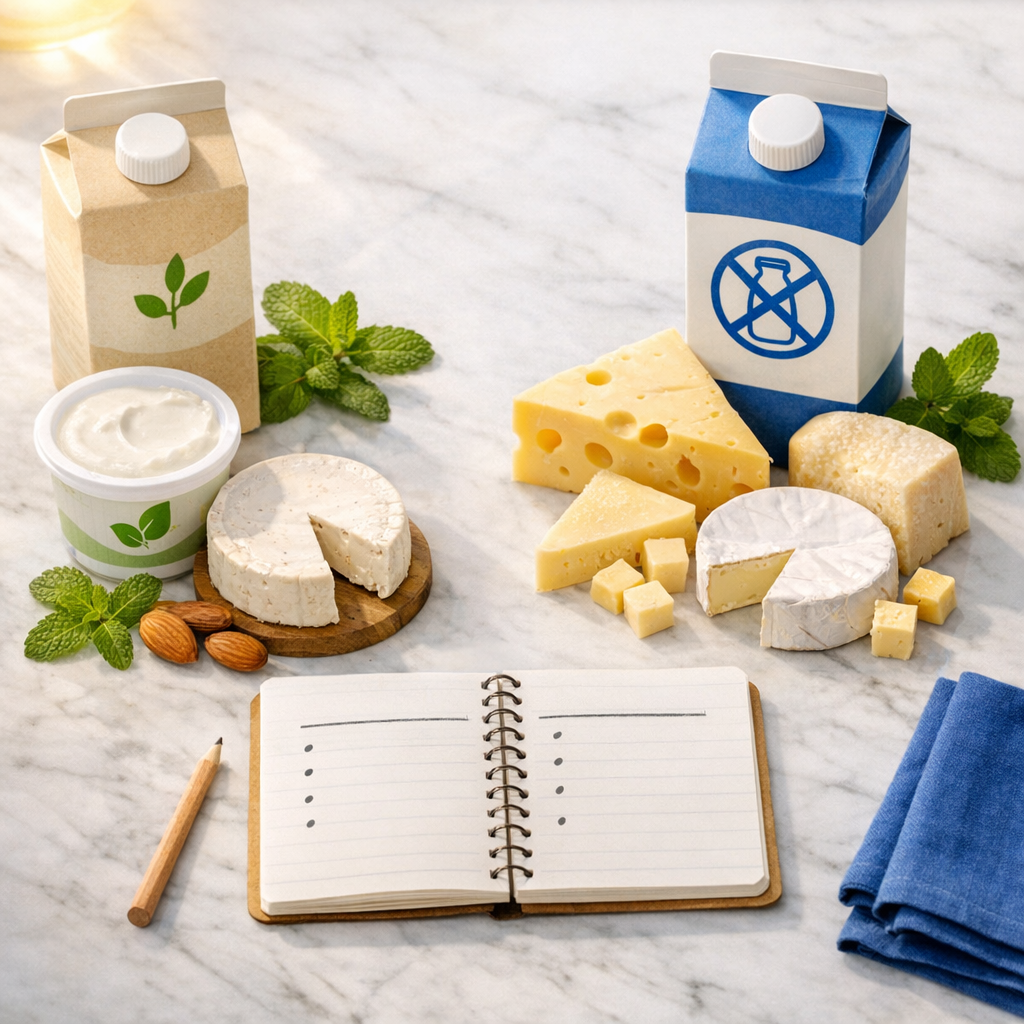
The dairy free vs lactose free difference comes down to one core distinction: lactose-free products still come from animals, while dairy-free products contain no animal milk whatsoever. Lactose-free milk is real cow’s milk that has had the sugar lactose removed or broken down using the enzyme lactase [1]. Dairy-free products – such as oat milk, almond milk, or soy milk – are entirely plant-based and contain neither lactose nor any other milk-derived component [2]. This matters enormously depending on your reason for avoiding dairy: lactose intolerance, a milk protein allergy, veganism, or general digestive sensitivity each calls for a different choice.
(Android version coming soon)
Key Takeaways
- Lactose-free = still dairy; lactose sugar is enzymatically broken down, but milk proteins like casein and whey remain [1].
- Dairy-free = no animal milk at all; suitable for those with milk protein allergies or following a vegan diet [2].
- People with lactose intolerance can usually tolerate lactose-free dairy; those with a milk allergy cannot [3].
- Plant-based dairy-free alternatives vary significantly in nutritional profile and are not automatically equivalent to cow’s milk [4].
- Fermented dairy products like yogurt and aged cheese are naturally lower in lactose and may be better tolerated by lactose-intolerant individuals [5].
- Nearly half of associations between dairy intake and adverse health effects showed no significant link in a recent large-scale review [6].
- Advances in Low-Lactose/Lactose-Free Dairy Products and Their Production (Zeng et al., 2023)
- Dairy and Plant-Based Milks: Implications for Nutrition and Planetary Health (Ramsing et al., 2023)
- Differentiating milk allergy from lactose intolerance (Crittenden & Bennett, 2005/PMC 2016 update)
- Assessing the Nutrient Content of Plant-Based Milk Alternatives (2025)
- Yogurt, cultured fermented milk, and health: a systematic review (Savaiano & Hutkins, 2021)
- Milk and dairy products — a scoping review for Nordic Nutrition Recommendations (2024)
- Lactose-Free Dairy Products: Market Developments and Production Technologies (Dekker et al., 2019)
- Low-calorie lactose-free brown fermented milk: enzymatic hydrolysis characterisation (2024)
- Dairy consumption and cardiovascular disease risk: a multi-level analysis (2025)
- Fermentation of Milk into Yoghurt and Cheese Leads to Contrasting Lipid Profiles (Millar et al., 2019)
Main Analysis
Want to check if your products contain hidden allergens or risky ingredients? Scan them instantly with the free MyGredient app.
(Android coming soon)
What Lactose-Free Actually Means
Lactose is the primary carbohydrate in cow’s milk. In the human digestive system, it must be broken down by the enzyme lactase into glucose and galactose before it can be absorbed [1]. When lactase production is insufficient – a condition called lactose intolerance – undigested lactose ferments in the colon, causing bloating, gas, and diarrhea. Lactose-free milk solves this by adding lactase directly to the milk during processing, pre-digesting the lactose before it ever reaches your gut [1].
Crucially, lactose-free milk retains all the proteins found in standard cow’s milk, including the A1 and A2 beta-casein proteins, as well as whey proteins [7]. A 2025 study published in the Journal of Dairy Science examined tolerance of protein-hydrolyzed lactose-free A1 milk and A2 milk in both lactose-tolerant and lactose-intolerant individuals, confirming that the protein composition remains an active variable even when lactose is removed [7]. This means someone with a milk protein allergy – not lactose intolerance – will still react to lactose-free milk.
A recent study on carbohydrate composition found that lactose-free cow’s milk still contains trace amounts of lactose (typically below 0.1 g per 100 ml) because the enzymatic process is not 100% complete, and it additionally contains galactose and glucose as breakdown products [8]. Regulators such as the FDA require products labelled lactose-free to meet specific thresholds, not necessarily zero lactose [3].
What Dairy-Free Actually Means
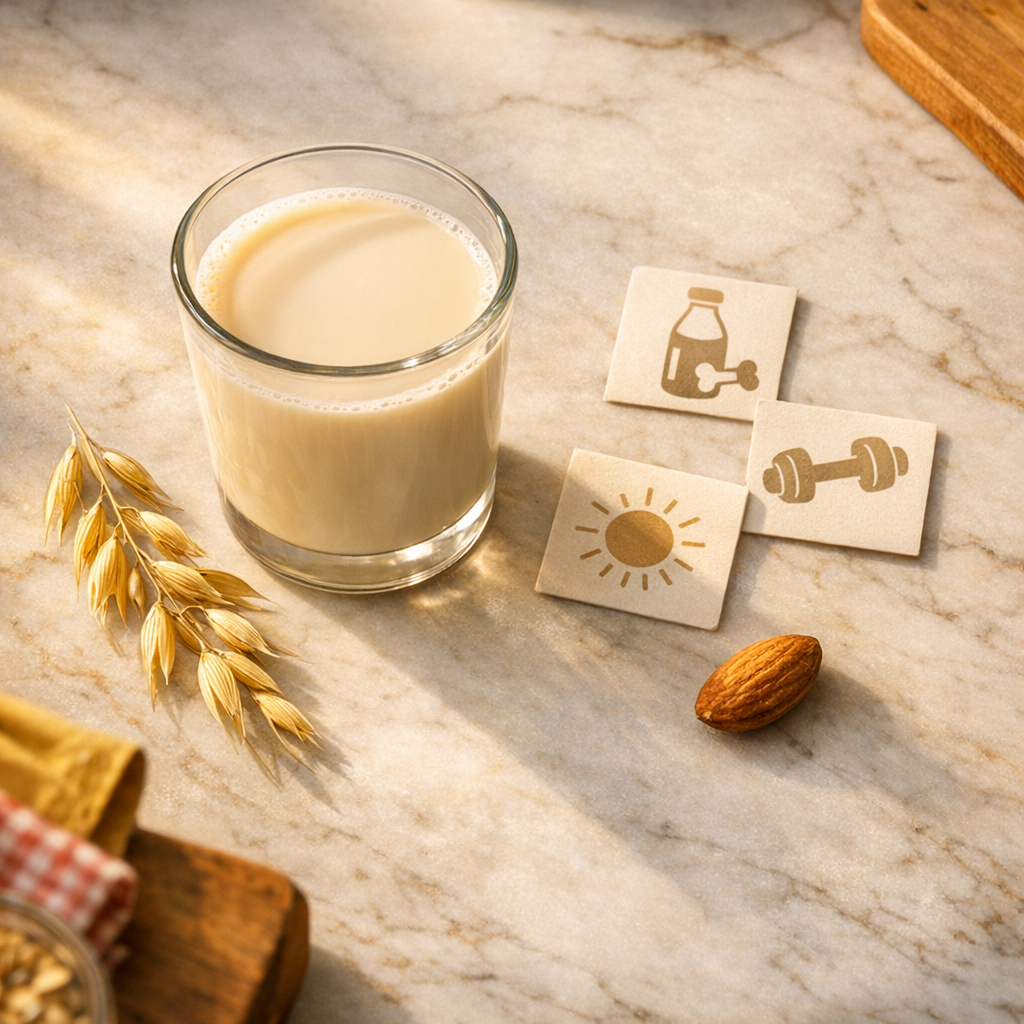
Dairy-free products contain absolutely no ingredients derived from animal milk. This category includes plant-based milks made from oats, almonds, soy, rice, coconut, hemp, and cashews. These products are suitable for people who are vegan, allergic to milk proteins, or simply prefer to avoid animal products entirely [2].
However, “dairy-free” is not synonymous with “nutritionally equivalent.” A 2025 analysis published in Current Developments in Nutrition explored the nutritional profile and cost of plant-based milk alternatives and found significant variability in protein, calcium, iodine, and vitamin B12 content compared to cow’s milk [4]. Oat milk, for instance, tends to be higher in carbohydrates, while almond milk is often very low in protein. Soy milk generally comes closest to cow’s milk in protein content [4].
Want a smarter way to scan food and cosmetic ingredients that’s personalized to your needs? download MyGredient app and scan products in seconds.
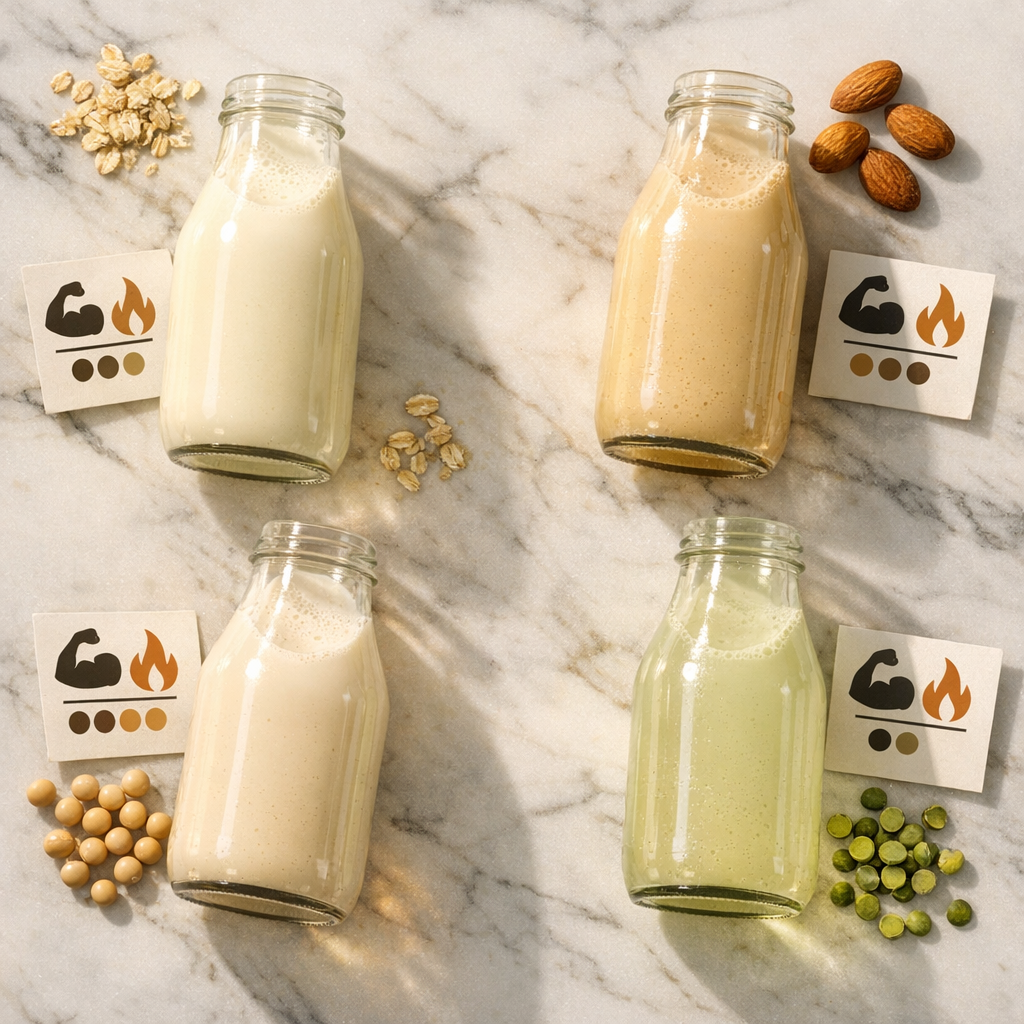
The prevalence of lactose intolerance is one of the primary factors driving consumer shifts toward plant-based milk alternatives [8]. Yet those switching for digestive reasons – rather than allergy or ethical reasons – may be choosing a more drastic solution than necessary. A lactose-intolerant person does not need to eliminate dairy entirely; they need to eliminate or manage lactose specifically.
Lactose Intolerance vs. Milk Protein Allergy: The Critical Distinction
Lactose intolerance is a digestive issue, not an immune response. The body fails to produce enough lactase, leading to uncomfortable but non-dangerous gastrointestinal symptoms [3]. A milk protein allergy, by contrast, is an immune-mediated reaction where the body mistakenly identifies milk proteins – primarily casein – as threats. Reactions can range from hives and digestive upset to anaphylaxis in severe cases [3].
For lactose-intolerant individuals, lactose-free dairy is entirely safe and often preferable because it preserves the nutritional benefits of milk – including high-quality protein, calcium, phosphorus, and vitamin D – without the digestive discomfort [5]. For those with a true milk allergy, only genuinely dairy-free products are appropriate [3].
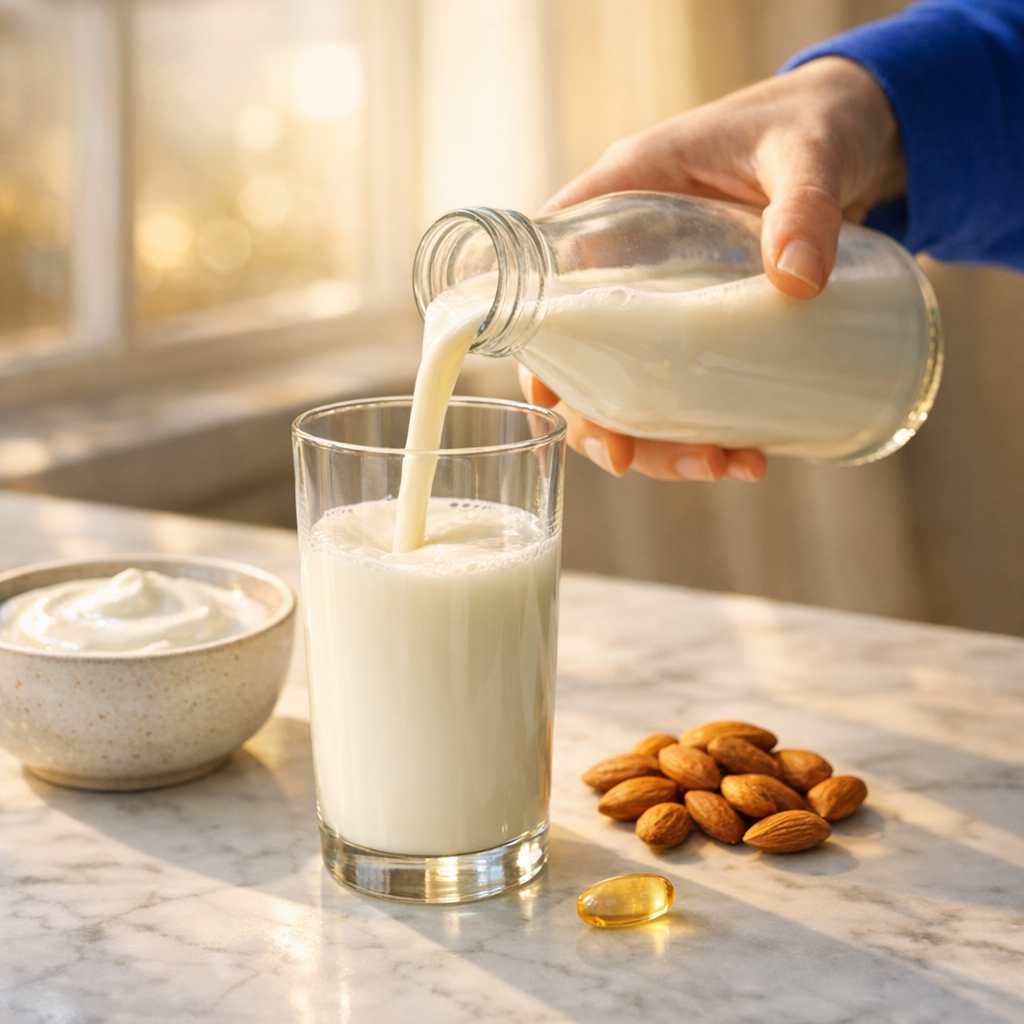
The Harvard T.H. Chan School of Public Health notes that fermented dairy products such as yogurt and aged cheeses are naturally lower in lactose because bacteria consume the lactose during fermentation [5]. This means many lactose-intolerant individuals can consume these foods without significant symptoms, further blurring the need for fully dairy-free alternatives unless there is an allergy or ethical preference involved [5].
Nutritional Trade-Offs and Health Outcomes
The decision between lactose-free and dairy-free has real nutritional implications. Dairy remains one of the most nutrient-dense whole foods available, providing calcium, high-quality protein, iodine, and vitamins B2 and B12 in highly bioavailable forms [6]. A 2025 scoping review published in the European Journal of Clinical Nutrition found that nearly half (48%) of associations between dairy consumption and health outcomes showed no significant link to adverse effects, and several associations were protective for cardiovascular and bone health outcomes [6].
A global analysis published in Nature Communications on dairy consumption and incident cardiovascular disease further reinforced that moderate dairy intake is not associated with increased cardiovascular risk across diverse populations [9]. These findings suggest that unnecessarily switching from lactose-free dairy to dairy-free alternatives may deprive some individuals of genuine nutritional value without offering a corresponding health benefit.
That said, research into functional dairy alternatives is evolving. A 2025 randomised controlled trial in Current Developments in Nutrition found that low-lactose, high galacto-oligosaccharide (GOS) milk had measurable effects on gut microbiome composition over two weeks compared to standard lactose-free milk, suggesting that not all lactose-free milks are nutritionally identical either [10].
Reading Labels: What to Watch For
Consumers navigating these distinctions should read labels carefully. A product labelled “non-dairy” – common on coffee creamers – may still contain casein, a milk protein [3]. The terms “non-dairy” and “dairy-free” are not interchangeable under current regulations. Additionally, plant-based milks vary widely in whether they are fortified with calcium and vitamin D, which are naturally present in cow’s milk [4].
If you want a quicker, more personalized way to check food and cosmetic ingredients while you shop, download MyGredient app for a fast ingredient scan.
For those managing lactose intolerance, looking for products labelled explicitly “lactose-free” or choosing naturally low-lactose fermented dairy like hard aged cheeses or Greek yogurt are practical first steps before eliminating dairy entirely [5].
FAQ
Can someone with a milk allergy drink lactose-free milk?
No. Lactose-free milk still contains all milk proteins, including casein and whey, which trigger allergic reactions in people with a true milk allergy [3]. Only genuinely dairy-free, plant-based alternatives are safe for this group. Always check labels to confirm a product contains no milk-derived ingredients.
Is dairy-free milk as nutritious as cow’s milk?
Not automatically. Plant-based dairy-free milks vary significantly in their levels of protein, calcium, iodine, and vitamins B12 and D [4]. Many are fortified to partially close this gap, but fortification levels differ by brand and product. Soy milk tends to be the closest plant-based option to cow’s milk in terms of protein content [4].
Does lactose-free milk taste different from regular milk?
Yes, many people notice that lactose-free milk tastes slightly sweeter. This is because the lactose has been pre-broken down into glucose and galactose, both of which taste sweeter than lactose itself [8]. The texture and appearance are otherwise essentially identical to standard cow’s milk.
For a simple way to check food and cosmetic ingredients before you buy, download MyGredient app and scan in real time.
Are all dairy-free products vegan?
Not necessarily. While dairy-free products contain no milk, they may still contain other animal-derived ingredients such as eggs, gelatin, or honey. A product must be specifically labelled vegan – not just dairy-free – to guarantee it contains no animal products of any kind [2].
Can lactose-intolerant people eat cheese and yogurt?
Many can, yes. Aged cheeses and fermented yogurts are naturally low in lactose because bacteria break it down during fermentation [5]. Harvard’s Nutrition Source confirms that yogurt and aged cheeses contain significantly less lactose than fresh milk, making them more tolerable for many people with lactose intolerance without requiring a switch to fully dairy-free products [5].
Download MyGredient for iOS
(Android version coming soon)
References
Written by the MyGredient Research Team
Our team researches ingredient safety, food labelling regulations, and skincare science to help consumers make informed choices. Every article is fact-checked against peer-reviewed sources and regulatory guidance.
🔬 Evidence-Based |
📚 Peer-Reviewed Sources |
📅 Updated March 2026
Medical Disclaimer: This content is for informational purposes only and does not constitute medical advice. Consult a qualified healthcare professional for personalised guidance. If you experience adverse reactions to any product, seek medical attention.