

Direct Answer
Yes, you can absolutely be allergic to fragrance. Fragrance contact allergy is one of the most common causes of allergic skin reactions worldwide, affecting an estimated 1 – 4% of the general population [1]. The reaction typically manifests as contact dermatitis – red, itchy, inflamed skin – but can also trigger respiratory symptoms, headaches, and in sensitive individuals, broader systemic effects [2]. Fragrance allergy is diagnosed through patch testing, and management primarily involves identifying and avoiding the specific triggering compounds [1].
(Android version coming soon)
Key Takeaways
- Fragrance allergy is real and common: It ranks among the most frequent causes of contact allergic reactions in modern populations [1].
- Symptoms go beyond skin: Reactions can include respiratory irritation, eye inflammation, headaches, and fatigue in sensitive people [2].
- Hidden exposure is widespread: Fragrance ingredients appear in cosmetics, cleaning products, air fresheners, candles, and even some foods [3].
- Patch testing is the gold standard: Diagnosis requires formal patch testing with fragrance mix panels, not self-diagnosis alone [1].
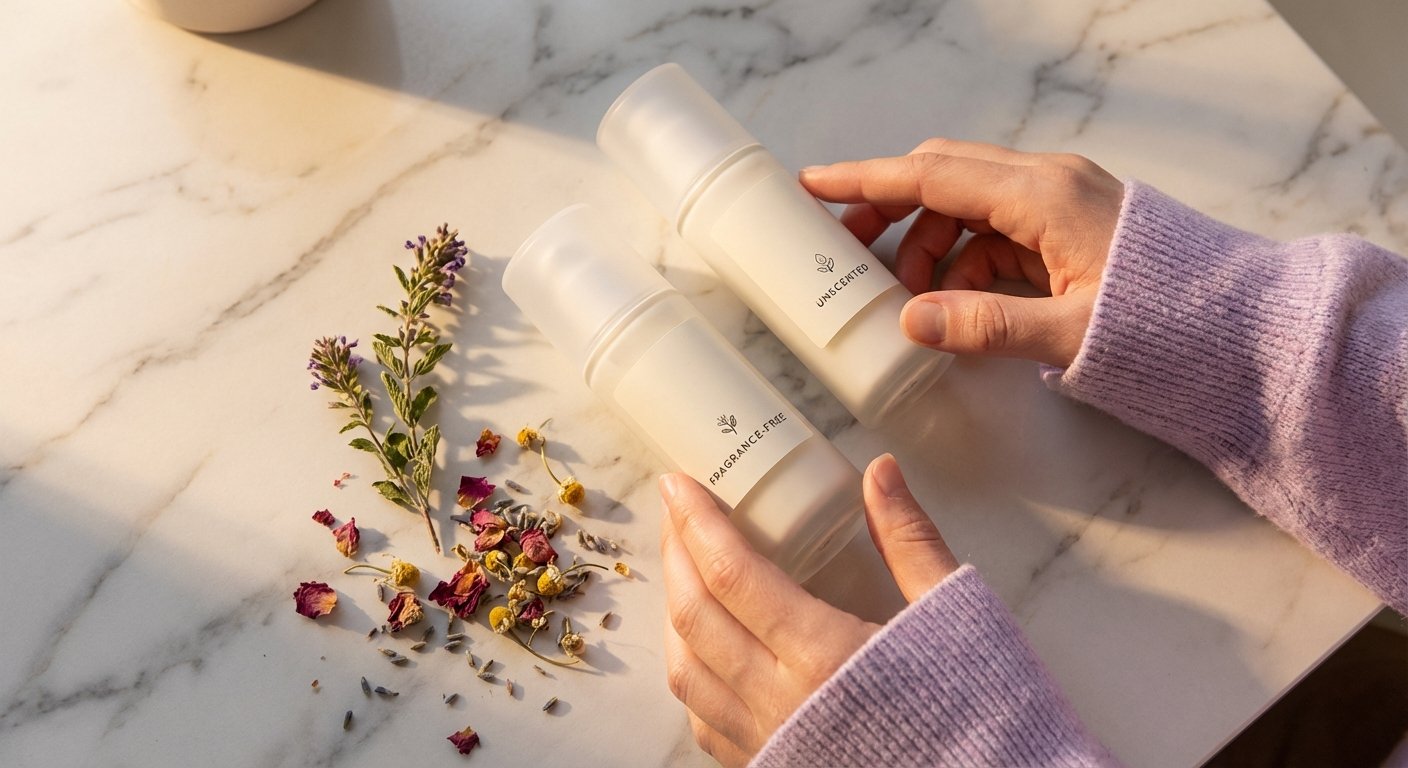
- Fragrance-free is not the same as unscented: “Unscented” products can still contain masking fragrances that provoke reactions [4].
- Safe alternatives exist: Fragrance-free certified products and certain naturally derived options offer lower-risk choices for sensitive individuals [5].
Main Analysis
Want to check if your products contain hidden allergens or risky ingredients? Scan them instantly with the free MyGredient app.
Try MyGredient Free(Android coming soon)
What Exactly Is Fragrance Allergy?
Fragrance allergy is a form of allergic contact dermatitis (ACD) – a delayed-type hypersensitivity reaction triggered when sensitised immune cells encounter specific chemical compounds in fragrance mixtures [1]. Unlike an immediate IgE-mediated food allergy, most fragrance reactions are Type IV hypersensitivity responses, meaning symptoms typically appear 24 – 72 hours after exposure rather than instantly [1].
Fragrance is not a single chemical. Modern perfumes and scented products can contain dozens to hundreds of distinct molecules – including terpenes, aldehydes, musks, and botanical extracts [3]. The complexity of these chemical cocktails makes identifying the precise trigger challenging, and risk assessment of whole perfumes is often incomplete [6]. Common culprits identified through patch testing include cinnamaldehyde, isoeugenol, geraniol, limonene, and the oakmoss compounds atranol and chloroatranol [1].
How Common Is It?
Fragrance sensitivity is strikingly prevalent. Surveys across Europe found that a meaningful percentage of the population reports fragrance-related health effects, with estimates of fragrance sensitivity in the general population ranging from roughly 3% to over 30% depending on how broadly “sensitivity” is defined [2]. Formal contact allergy – confirmed by patch testing – affects approximately 1 – 4% of people in developed nations [1]. Among patients referred to dermatology clinics for patch testing, fragrance allergy rates are considerably higher, often exceeding 10% [4].
A large international survey on the effects of fragrances on quality of life found that a substantial portion of respondents experienced health effects from fragrance exposure in public spaces, workplaces, and consumer products, with reported consequences ranging from respiratory tract irritation to reduced ability to work or socialise [2]. Women and individuals with pre-existing atopic conditions such as eczema appear to be at elevated risk [7].
Signs and Symptoms to Watch For
The hallmark presentation of fragrance allergy is contact dermatitis: redness, itching, scaling, and sometimes blistering on skin that has come into direct contact with a scented product [1]. Common sites include the face, neck, wrists, and hands – areas where perfume, moisturiser, or scented soap is typically applied.
Beyond skin symptoms, fragrance-sensitive individuals frequently report:
Want a smarter way to scan food and cosmetic ingredients that’s personalized to your needs? download MyGredient app and scan products in seconds.
- Rhinitis, nasal congestion, or sneezing upon exposure to ambient fragrances [2]
- Eye irritation and watering [2]
- Headaches and migraines [2]
- Breathing difficulties, particularly in those with asthma [3]
- Fatigue and cognitive effects following heavy or prolonged exposure [2]

Some researchers propose that in individuals with chemical intolerance, mast cell activation may amplify these responses, explaining why even a brief whiff of a fragrance can provoke rapid, multisystem symptoms that seem disproportionate to the dose [8]. This mechanism is distinct from classic ACD but may co-exist with it in highly sensitive people [8].
The Diagnostic Process
If you suspect fragrance allergy, the appropriate step is referral to a dermatologist or allergist for patch testing [1]. Standard patch test panels include fragrance mix I (FM I), fragrance mix II (FM II), and Myroxylon pereirae (balsam of Peru) – a complex natural resin that cross-reacts with many fragrance ingredients [1]. Specialised cosmetic allergen panels and extended fragrance surveillance studies are continuously refining which ingredients should be included, since many widely-used fragrance materials have not yet been systematically tested in clinical populations [5].
Self-diagnosing based on symptoms alone is unreliable. A positive patch test result confirms sensitisation but must be interpreted alongside clinical history to determine relevance [4]. A 2025 review of contact allergy in cosmetics emphasised that photopatch testing and repeated open application tests may also be necessary for a complete clinical evaluation in complex cases [4].
Where Fragrance Hides
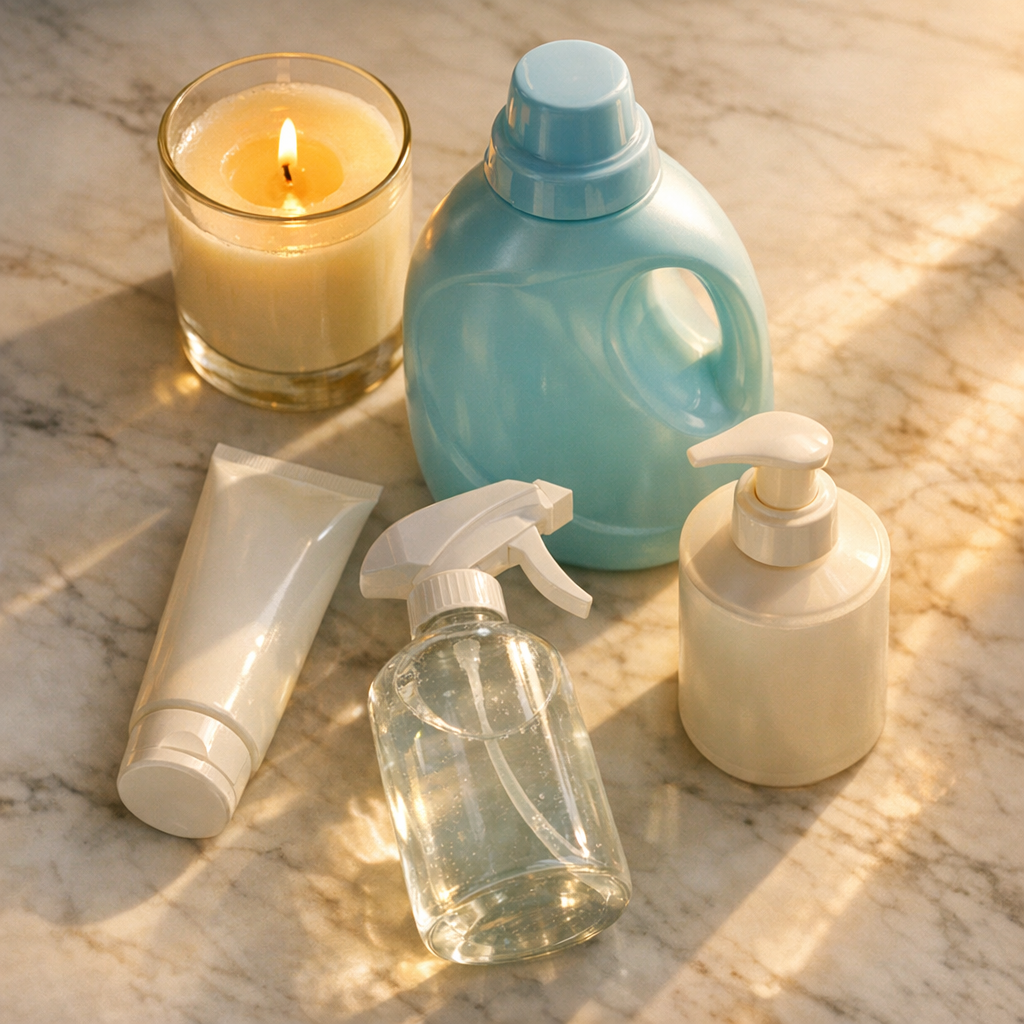
Many people are surprised to learn how ubiquitous fragrance exposure is. Beyond obvious products like perfume and cologne, fragrance ingredients are present in:
- Skincare and haircare products (moisturisers, shampoos, conditioners)
- Household cleaning products and laundry detergents
- Air fresheners and scented candles
- Tissues, toilet paper, and sanitary products
- Some topical medications and sunscreens [1]
Fragranced consumer product emissions have been documented in indoor and outdoor environments, meaning exposure can occur even without direct skin contact [3]. This is particularly relevant for individuals with respiratory sensitivity or chemical intolerance.
Critically, “unscented” products are not synonymous with “fragrance-free.” Manufacturers sometimes add masking fragrances to neutralise chemical odours without disclosing a scent – these masking agents can still trigger reactions in sensitised individuals [4].
Safe Alternatives and Practical Management
The most effective management strategy for confirmed fragrance allergy is strict avoidance of identified allergens [1]. In practice, this means:
- Choosing certified fragrance-free products: Look for products explicitly labelled “fragrance-free” and verified by a dermatological or allergy organisation, rather than relying on “natural” or “hypoallergenic” claims, which are unregulated in many jurisdictions.
- Reading ingredient lists carefully: EU regulations require the disclosure of 26 known fragrance allergens on cosmetic labels when present above threshold concentrations [1]. Familiarise yourself with common names like linalool, citronellol, and eugenol.
- Patch testing new products: Apply a small amount to the inner forearm for several days before full use.
- Considering naturally-derived alternatives with caution: Some individuals assume natural or botanical fragrances are safer, but ingredients like limonene (from citrus) and linalool (from lavender) are themselves significant contact allergens [1]. There is no inherent safety advantage to “natural” fragrance.
- Advocating for fragrance-free environments: For those with severe sensitivity, requesting fragrance-free policies in workplaces or healthcare settings may be appropriate [2].
Ongoing clinical surveillance, such as the Extended Fragrance Ingredients Surveillance Study (EFISS), is actively investigating contact allergy rates to fragrance materials in widespread use that have not yet been formally assessed, signalling that the regulatory landscape around fragrance labelling is likely to evolve [5].
If you want a quicker, more personalized way to check food and cosmetic ingredients while you shop, download MyGredient app for a fast ingredient scan.
FAQ
Can fragrance allergy develop later in life even if you’ve never reacted before?
Yes. Allergic sensitisation can occur at any age following repeated or prolonged exposure to a fragrance ingredient. The immune system builds a memory response over time, so an individual might tolerate a product for years before suddenly developing a reaction upon re-exposure [1]. This delayed-onset pattern is a defining characteristic of Type IV contact hypersensitivity.
Is fragrance allergy the same as fragrance sensitivity or intolerance?
No, these are distinct conditions. Fragrance allergy (contact dermatitis) is a confirmed immunological response identifiable via patch testing [1]. Fragrance sensitivity or chemical intolerance refers to a broader cluster of symptoms – including headaches, respiratory effects, and fatigue – that may occur without a detectable immune mechanism, potentially involving neurological or mast cell pathways [8]. Both are real and clinically significant, but they require different diagnostic and management approaches.
Are children more vulnerable to fragrance allergy than adults?
Children, particularly those with atopic dermatitis (eczema), have a compromised skin barrier that may increase absorption of fragrance chemicals and heighten sensitisation risk [7]. Atopic dermatitis is associated with a broader susceptibility to contact allergens, and fragrance ingredients feature prominently among triggers in paediatric dermatology cases [7]. Parents should select fragrance-free products for children with eczema-prone skin.
Do I need to avoid all fragrances if I’m allergic to one?
Not necessarily. Patch testing can identify the specific compounds driving your reaction. Because fragrance mixes contain multiple molecules, you may be sensitised to only one or a few ingredients [1]. However, cross-reactivity between structurally related compounds is common, and some natural botanical ingredients share molecules with synthetic allergens. Working with a dermatologist to understand your specific sensitisation profile is more effective than blanket avoidance of all scented products [4].
For a simple way to check food and cosmetic ingredients before you buy, download MyGredient app and scan in real time.
Can fragrance allergy cause asthma or breathing problems?
Fragrance exposure is well-documented as a trigger for respiratory symptoms, including worsening of pre-existing asthma, rhinitis, and airway irritation [3]. Volatile fragrance compounds emitted from products can be inhaled and irritate mucous membranes [2]. While classic fragrance contact allergy is primarily a skin condition, the respiratory effects represent a separate but overlapping concern, particularly in individuals with atopic or respiratory conditions who may experience both skin and airway reactions to the same products [3].
(Android version coming soon)
References
- Fragrance Contact Allergy – A Review Focusing on Patch Testing (Sukakul et al., 2024)
- Prevalence and Risk Factors of Self-Reported Perfume Sensitivity (Alrasheed et al., 2021)
- Do Synthetic Fragrances in Personal Care and Household Products Impact Indoor Air Quality and Health? (Gandhi Rádis-Baptista, 2023)
- What is New in Contact Allergy To Cosmetics for Physicians (2025 review)
- Extended fragrance ingredients surveillance study (EFISS) – protocol (Uter W et al., 2025)
- Ubiquity, Hazardous Effects, and Risk Assessment of Fragrances in Consumer Products (María-Antonia Pastor-Nieto and María-Elena Gatica-Ortega, 2021)
- Contact allergy in children with and without atopic dermatitis (Italian multicentre study, 2022)
- Chemical Intolerance and Mast Cell Activation (Palmer et al., 2023)
Written by the MyGredient Research Team
Our team researches ingredient safety, food labelling regulations, and skincare science to help consumers make informed choices. Every article is fact-checked against peer-reviewed sources and regulatory guidance.
🔬 Evidence-Based | 📚 Peer-Reviewed Sources | 📅 Updated March 2026
Medical Disclaimer: This content is for informational purposes only and does not constitute medical advice. Consult a qualified healthcare professional for personalised guidance. If you experience adverse reactions to any product, seek medical attention.