
Direct Answer
If you follow a vegan lifestyle, reading ingredient labels is not optional. Many everyday foods still contain hidden animal-derived additives disguised as technical names, E-numbers, or processing aids, which makes a practical non vegan ingredients list useful far beyond obvious meat and dairy products. In this guide, you will learn which ingredients most often catch shoppers out, where they commonly appear, and how to check products faster before you buy. If you want a quicker way to screen ingredients on the go, you can install MyGredient, review the pricing options, or start with the main MyGredient site.
(Android version coming soon)
Key Takeaways
- Ultraprocessed foods are the most likely to contain hidden animal-derived additives, because their ingredient lists are long and chemically complex [1].
- Animal ingredients often appear under technical or Latin names that give no obvious clue to their origin.
- Even plant-forward diets can inadvertently include animal products through cross-contamination in processing or unexpected additives [2].
- Switching to whole, minimally processed foods is the most reliable way to avoid accidental animal consumption [1].
- Research consistently links plant-based diets with lower cardiovascular disease risk, making accurate label reading important for both ethics and health [3].
Main Analysis
Want to check if your products contain hidden allergens or risky ingredients? Scan them instantly with the free MyGredient app.
Try MyGredient Free(Android coming soon)
Why Hidden Ingredients Are Such a Problem
Modern food manufacturing relies on hundreds of functional additives – emulsifiers, stabilisers, glazing agents, and clarifying agents – many of which are derived from animal tissues, secretions, or by-products [1]. Harvard Health notes that ultraprocessed foods routinely include emulsifiers, thickeners, and artificial substances that most consumers never scrutinise [1]. For vegans, this creates a minefield. The ten ingredients below are among the most commonly encountered yet least recognised on a sneaky non vegan ingredients list.
1. Gelatin
Gelatin is derived from boiled animal bones, skin, and connective tissue – most commonly from pigs and cattle. It appears in marshmallows, gummy sweets, cheesecake fillings, certain yoghurts, and even some vitamin capsules. The word “gelatin” is usually printed clearly, but it also hides inside listed ingredients like “capsule shell” on supplement labels [4].
2. Carmine (E120)
This vivid red dye is produced from crushed cochineal insects. It is widely used to colour red and pink food products including fruit juices, jams, sweets, and some flavoured yoghurts. On ingredient labels it appears as carmine, cochineal, carminic acid, crimson lake, or simply E120. The Food and Drug Administration requires carmine to be declared by name rather than just colour [5].
3. Casein and Whey
Both are proteins derived from cow’s milk. Whey appears in protein bars, bread improvers, and some margarines. Casein, the principal milk protein, is found in non-dairy creamers labelled “lactose-free” – a common trap because lactose-free does not mean dairy-free [4]. Plant-based diets have been studied for their benefits in type 2 diabetes management [6], making accurate avoidance of these proteins particularly relevant for vegans managing blood sugar.
4. L-Cysteine (E920)
This amino acid is commonly used as a dough conditioner in commercially produced bread, wraps, and pizza bases. Although synthetic versions exist, much of the L-cysteine used in food production is sourced from duck feathers, human hair, or hog hair. The label simply reads “L-cysteine” or “E920,” with no indication of its origin.
5. Isinglass
Isinglass is a fining agent derived from dried fish bladders, used to clarify beer and wine by attracting yeast and sediment particles that sink to the bottom of the vessel. The finished product rarely mentions it because fining agents are considered processing aids rather than ingredients in many regulatory frameworks. Wines labelled “suitable for vegans” have been processed without isinglass or other animal-derived finings such as egg albumin or casein [4].
Want a smarter way to scan food and cosmetic ingredients that’s personalized to your needs? download MyGredient app and scan products in seconds.

6. Shellac (E904)
Shellac is a resin secreted by the female lac bug. In food production, it is applied as a glazing agent to give a shiny coating to confectionery, citrus fruits, and some chocolate products. Its listing as E904 or “glazing agent” makes it easy to overlook. The European Food Safety Authority recognises shellac as an approved food additive [7], but it is unambiguously animal-derived.
7. Omega-3 Fatty Acids (Fish-Derived)
Many foods are fortified with omega-3 fatty acids sourced from fish oil – including certain brands of orange juice, margarine, and infant formula. The label may simply state “omega-3” or “DHA,” without clarifying the source. Plant-based alternatives derived from algae exist and provide the same long-chain EPA and DHA fatty acids, but the default in fortified foods is almost always fish-derived [2].
8. Vitamin D3
Vitamin D3 (cholecalciferol) is most commonly synthesised from lanolin, the waxy substance extracted from sheep’s wool. It is added to breakfast cereals, plant milks, orange juice, and bread. Vitamin D2 (ergocalciferol) and lichen-derived D3 are vegan alternatives, but food manufacturers overwhelmingly favour the lanolin-sourced version. Research in vegan populations highlights the risk of vitamin D deficiency and the importance of checking supplement and fortified food sources carefully [8].

9. Beeswax (E901) and Honey
Beeswax appears as a glazing agent on chocolate confectionery, some fruit coatings, and dental floss. Honey is an obvious animal product, but it hides in granola bars, flavoured teas, certain breads, and salad dressings under terms like “natural sweetener” or “raw sweetener.” Both are products of bee exploitation and are excluded from a strict vegan diet.
10. Rennet
Animal rennet is an enzyme complex extracted from the stomach lining of ruminant animals and is used traditionally to coagulate cheese. Even some vegetarian cheeses use microbial or fermentation-produced rennet rather than animal rennet, but many artisan cheeses – including Parmesan (Parmigiano-Reggiano) – are protected by regulations that require traditional animal rennet, making them non-vegan regardless of their vegetarian appearance [4].
How Plant-Based Substitution Supports Health
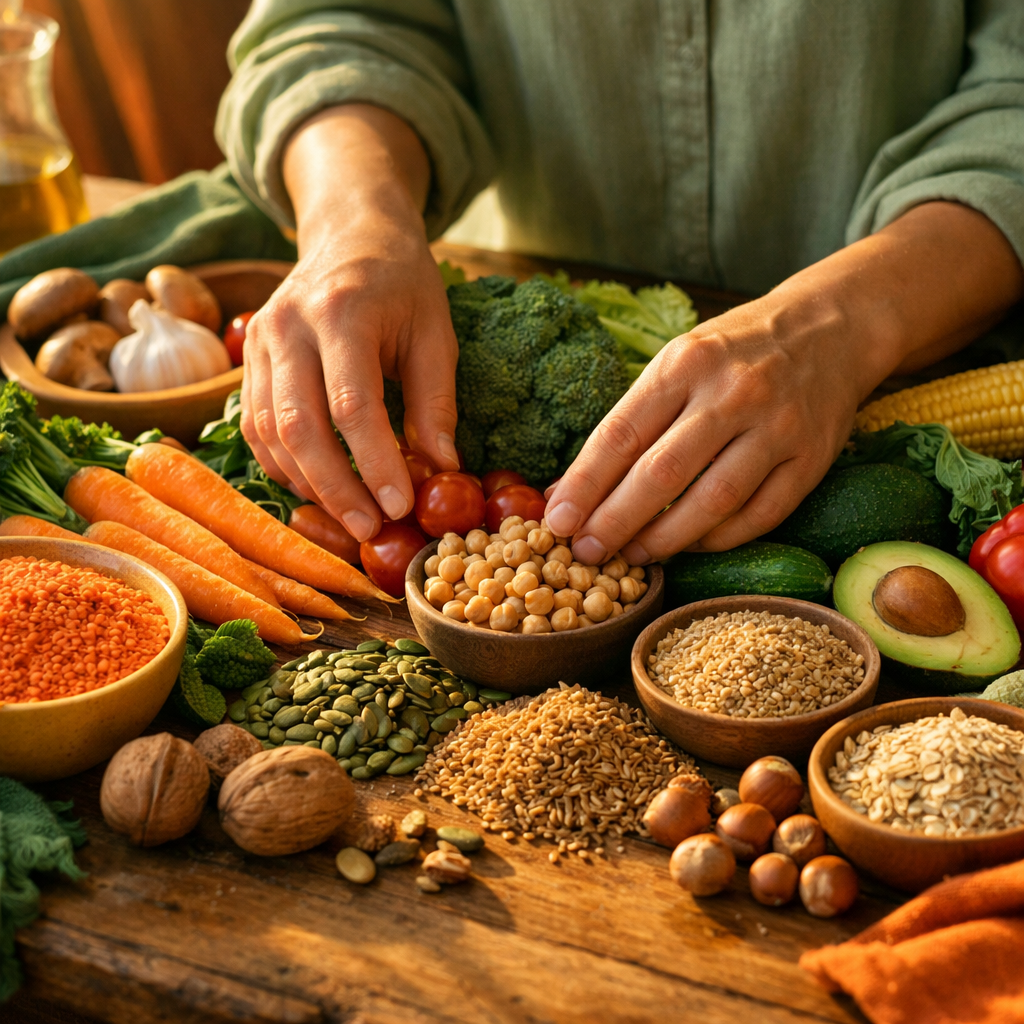
Avoiding these hidden ingredients is not just an ethical choice – it often aligns with healthier eating patterns. Research published in BMC Medicine found that substituting processed meat with nuts or legumes was associated with a significantly lower incidence of total cardiovascular disease [3]. A whole-food plant-based approach, free from inadvertent animal additives, also tends to feature the anti-inflammatory dietary patterns that Harvard Health has long advocated [9]. The rise of plant-based food alternatives has expanded consumer options considerably [6], making complete avoidance of animal-derived ingredients more practical than ever.
If you want a quicker, more personalized way to check food and cosmetic ingredients while you shop, download MyGredient app for a fast ingredient scan.
Practical Strategies for Avoiding Hidden Animal Ingredients
- Use vegan certification logos – products bearing an accredited vegan trademark have been audited against agreed standards.
- Download a vegan ingredient checker app – scanning barcodes can flag E-numbers and additives instantly.
- Choose shorter ingredient lists – the fewer ingredients listed, the lower the risk of encountering obscure animal-derived additives [1].
- Contact manufacturers directly – brands are legally required to respond to allergen and ingredient queries.
- Look for algae-based omega-3 and lichen-derived D3 when selecting fortified foods or supplements [8].
FAQ
Is sugar always vegan?
Not necessarily. Some refined white sugar is processed through bone char – charcoal made from animal bones – used as a decolourising filter. Organic cane sugar, beet sugar, and sugars labelled “unrefined” or “vegan” are produced without bone char. Checking with the manufacturer is the safest approach if the label is unclear.
Are all E-numbers animal-derived?
No – the vast majority of E-numbers are plant-derived, synthetic, or mineral-based. However, a handful are consistently animal-derived, including E120 (carmine), E441 (gelatin), E901 (beeswax), E904 (shellac), and E542 (bone phosphate). Familiarising yourself with this short list significantly simplifies label reading.
Can wine and beer be vegan?
Yes, many wines and beers are produced without animal-derived fining agents. Producers increasingly use bentonite clay, activated charcoal, or pea protein as vegan-friendly alternatives to isinglass, gelatin, and egg albumin. Dedicated vegan wine databases and labels marked “suitable for vegans” are the most reliable guide when purchasing.
How do I know if my vitamin D supplement is vegan?
Look specifically for supplements stating “vitamin D2,” “ergocalciferol,” or “vitamin D3 from lichen” – these are reliably vegan. Standard vitamin D3 labelled as “cholecalciferol” without a plant-based source statement is almost certainly derived from lanolin. Research confirms that vitamin D status is a particular concern for those on vegan diets, making supplementation important [8].
For a simple way to check food and cosmetic ingredients before you buy, download MyGredient app and scan in real time.
Are natural flavours vegan?
Not always. “Natural flavours” is a broad regulatory category that legally encompasses flavouring substances derived from plant or animal sources. Meat, seafood, dairy, and eggs can all contribute to compounds listed simply as “natural flavour.” When in doubt, contact the manufacturer or choose products with fully transparent ingredient declarations.
(Android version coming soon)
References
- Food additives and heart health – Harvard Health
- Dietary intake, nutritional status, and health outcomes among vegan populations – Nature Medicine
- Substitution of animal-based with plant-based foods and cardiovascular disease risk – BMC Medicine (Springer)
- The best ways to identify processed foods – Harvard Health
- Color Additives History – U.S. Food and Drug Administration
- The rise of plant-based meat alternatives: Challenges and opportunities – ScienceDirect
- Re-evaluation of shellac (E 904) as a food additive – EFSA Journal
- Health aspects of vegan diets – systematic review evidence – Nature Medicine
- Foods that fight inflammation – Harvard Health
Written by the MyGredient Research Team
Our team researches ingredient safety, food labelling regulations, and skincare science to help consumers make informed choices. Every article is fact-checked against peer-reviewed sources and regulatory guidance.
🔬 Evidence-Based | 📚 Peer-Reviewed Sources | 📅 Updated March 2026
Medical Disclaimer: This content is for informational purposes only and does not constitute medical advice. Consult a qualified healthcare professional for personalised guidance. If you experience adverse reactions to any product, seek medical attention.
Conclusion
Hidden animal-derived additives are much easier to miss when labels rely on technical names, processing language, or unclear flavour systems. A practical screening habit is to check the ingredient list first, then compare unclear items against a reliable ingredient tool before you buy. You can install MyGredient, compare the pricing plans, or return to the main MyGredient site for broader ingredient guidance.
For related reading, see Could Your Lactose-Free Food Still Have Dairy? and Is Your Favorite Fragrance Secretly Triggering Allergies?.